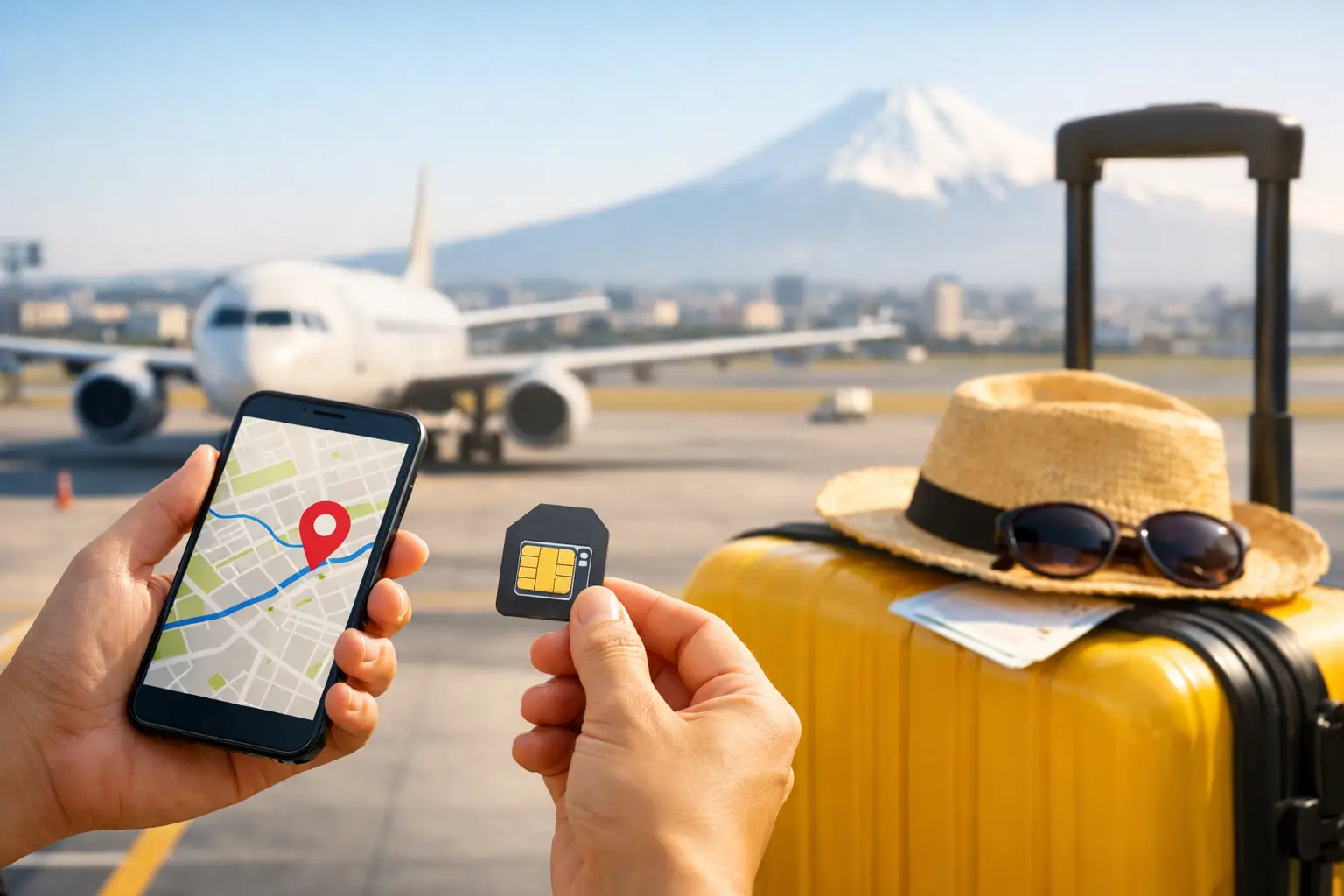
You have just landed, the seatbelt sign is off, and you need to message your driver, check your hotel address, or tell family you arrived. That is when the roaming versus eSIM decision stops being a technical question and becomes a travel decision. One option may work with no preparation. The other can give you more control over your data costs before you even leave home.
The key detail: roaming and eSIM are not exactly the same type of product. Roaming is a service provided by your home mobile carrier. An eSIM is a digital SIM format that can hold a travel data plan from another provider. Understanding that difference makes it much easier to choose the right setup for your trip.
Roaming versus eSIM: the real difference
International roaming lets your regular carrier connect your phone to a partner network overseas. You keep your usual number, use your existing SIM, and often receive calls and texts as normal. If your carrier includes international data in your plan or offers a daily travel pass, it can be the lowest-effort choice.
An eSIM lets you add a separate mobile plan digitally, usually for a destination, region, or fixed amount of data. Instead of visiting a store for a physical SIM card, you install the plan on your compatible phone. For most travelers, that means data is ready when they arrive while their primary line can remain active for calls, texts, and two-factor authentication.
So the better question is not always, “Is roaming or eSIM better?” It is, “Do I want the convenience of my existing carrier plan, or a separate travel data plan with more control over price and allowance?”
When roaming is the better choice
Roaming makes sense when simplicity matters more than the cost of data. A two-day business trip, a quick border crossing, or a situation where you must be reachable on your US number can all favor your home carrier’s travel option.
It can also be helpful for travelers who do not have an eSIM-compatible phone, do not want to change mobile settings, or need voice calling as part of their trip. Many travel eSIMs are data-only, so you would use WhatsApp, FaceTime Audio, Google Meet, or another internet calling app rather than receive standard calls on a new local number.
The downside is that roaming plans vary widely. Some charge a daily fee whether you use a little data or a lot. Others reduce speeds after a certain amount of high-speed data. If you are traveling for a week or two, a “small” daily charge can turn into a surprisingly large bill.
Before relying on roaming, check four things in your carrier app: the daily price, the high-speed data limit, what happens after that limit, and whether your destination is included. Do not assume that a plan covering Europe also covers every country on your itinerary.
Why many travelers choose an eSIM
A travel eSIM is usually designed around a clearer purchase decision: where you are going, how long you will be away, and how much data you expect to use. That can be a better fit for vacation travel, multi-day work trips, and anyone who wants to avoid daily roaming charges.
You can buy the plan before departure and install it while you still have reliable Wi-Fi. Once you land, turn on the eSIM data line and get online without searching for an airport kiosk or swapping out a tiny physical SIM card in a cab.
This approach is especially useful if data is your main need. Maps, ride-hailing, restaurant bookings, boarding passes, translation, social media, and messaging all depend on data first. Keeping your home line active for texts while using an eSIM for data gives you a practical two-line setup without carrying two phones.
With a provider such as Traverrsim, the purchase flow is built for that last-minute moment: choose a destination and trip length, pay, and receive the eSIM in seconds. Supported iPhones can also use tap-to-activate setup rather than requiring a QR-code scan. Install before departure, and the first thing you do after landing does not have to be hunting for Wi-Fi.
Cost: compare the total trip, not the headline price
The most common mistake is comparing a single day of roaming with a full eSIM plan. A $10 daily roaming pass may sound reasonable for one day. Over 10 days, it can cost $100 before you know whether the plan gives enough high-speed data for your habits.
An eSIM may have a lower upfront price, but you should still read what you are buying. Is the allowance 1 GB, 5 GB, or unlimited data with a fair-use limit? Does it last for seven calendar days or 168 hours from activation? Can you top up if you run out? Does it cover one country or multiple countries?
Your actual data habits matter more than the label on the plan. Light users who mostly use maps and messages may be comfortable with a smaller package. Heavy users who post video, scroll social apps, work from a laptop hotspot, or stream entertainment need more room. Hotel Wi-Fi can help, but it is not a good reason to buy too little data when you will rely on your phone outside.
There is no automatic winner on price. Roaming can be fair value when it is included in a premium carrier plan. For many other trips, a prepaid eSIM offers a more predictable total because you choose the data package before you travel.
Setup and reliability: plan before boarding
Roaming wins on familiarity. In many cases, you simply enable data roaming and use your phone as usual. But that does not mean it is foolproof. Your carrier may require a travel pass to be activated, and data roaming can be disabled in your phone settings by default.
An eSIM takes a few minutes of preparation, but it gives you a backup plan you control. Check that your phone is carrier-unlocked and supports eSIM. Install the plan before leaving, label it clearly, and set it as your cellular data line when you arrive. Keep your primary US line enabled if you need incoming texts, but turn off cellular data switching so your phone does not quietly use expensive home-plan roaming data.
It is smart to download offline maps, save hotel details, and take screenshots of your activation instructions before your flight. These are small steps, but they remove stress if the airport network is crowded or your destination has weak Wi-Fi.
Coverage also depends on the local network, not just whether you chose roaming or eSIM. A good plan should connect to strong local partners, but mountains, remote islands, underground transit, and rural roads can still have weak service. If dependable data is critical for work, check whether your plan permits hotspot use and carry a backup option when possible.
China is a different connectivity decision
For travel to China, data is not only about speed and price. It is also about access to the apps you use every day. Standard local connectivity may not allow normal access to services such as WhatsApp, Instagram, Google, and other familiar platforms without additional tools.
That is why travelers should confirm exactly how their plan handles access before departure. A travel eSIM that includes the needed VPN support can reduce the number of moving parts once you arrive. The goal is simple: your maps, messages, and social apps should work when you need them, not after an hour of troubleshooting in a hotel lobby.
Choose based on your trip, not the trend
Use roaming if your carrier has a genuinely good international package, you are away briefly, and keeping everything on your primary number matters most. Choose an eSIM if you want prepaid data, a clearer trip-wide cost, fast setup before departure, or a separate data line that leaves your home number available.
For longer trips, compare the numbers across the entire itinerary. For short trips, compare the convenience. And if you are traveling somewhere with app restrictions or complicated local connectivity, prioritize a plan that solves that problem upfront.
Your phone should be ready before the boarding gate, not become another task after landing. Pick the option that lets you open your map, send the first message, and get on with the trip.